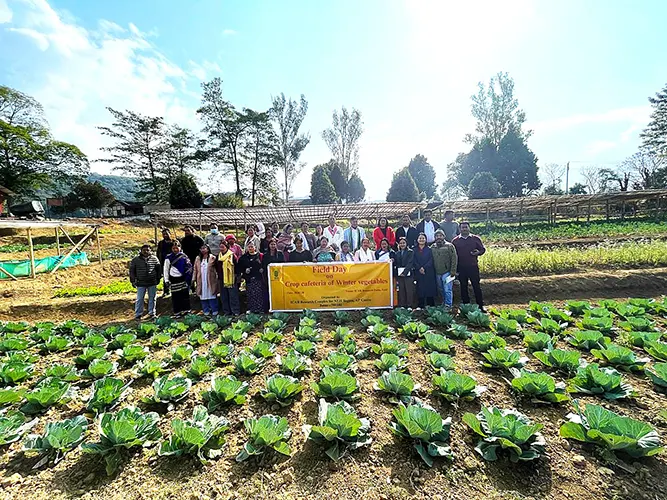
GORI, 20 Jan: A field day on ‘Diversified vegetable cropping system through crop cafeteria’ was organised at the ICAR Arunachal Pradesh (ICAR-AP) research farm here on Tuesday to showcase improved winter vegetable crops and promote diversification for enhancing farmers’ income and nutritional security under rainfed conditions.
ICAR-AP Centre senior scientist Dr Doni Jini spoke on institutional efforts of the ICAR in strengthening vegetable-based farming systems, and urged the farmers to make the best use of the various facilities under ICAR programmes.
ICAR-AP Centre senior scientist Dr Patu K Zelianghighlighted the theme of the programme, and the purpose of the crop cafeteria in exposing farmers to a wide range of suitable vegetable crops.
This was followed by a technical talk on ‘Diversified vegetable cropping system through crop cafeteria’ by ICAR-AP Centre scientist Thejangulie Angami, who explained the concept, benefits, and scope of crop cafeteria in improving cropping choices, resilience, and farm profitability.
West Siang KVK Head Dr Manoj Kumar spoke on the role of the KVKs and the ICAR in transferring location-specific technologies to farmers.
District Agriculture Officer Sengo Dini in his address commended the ICAR’s initiative and urged farmers to adopt diversified vegetable cultivation “using suitable varieties and scientific practices to improve income and livelihood security.”
During the field visit, the agricultural officials and farmers witnessed the successful cultivation of cauliflower under shade-net conditions, as the crop normally fails to produce proper curds under open-field conditions in the region.
The demonstration highlighted the role of protected cultivation in overcoming climatic limitations. In addition, the various garden pea variety evaluationsattracted significant attention due to its vigorous growth, uniform pod development, and good adaptation to local winter conditions, indicating its strong potential for wider adoption by farmers.
The field day witnessed active participation of farmers, scientists, extension personnel, officials from the Agriculture Department and the ArSRLM, and members of women SHGs.