RONO HILLS, 31 Mar: Emphasising the role of youthsin shaping the future, Cultural Affairs Minister Dasanglu Pul on Tuesday said young people are the torchbearers of both tradition and innovation and must work towards preserving the state’s rich cultural legacy while embracing modern ideas.
Addressing the Somnath Samvaad – Youth Edition (Somnath Swabhiman Parv 2026) at Rajiv Gandhi University (RGU) here on Tuesday, Pul stressed the need to strike a balance between tradition and progress for holistic development.
She urged youths to take pride in their heritage and actively contribute to its preservation and promotion on a wider platform.
Reiterating the state government’s commitment to promoting art and culture, the minister called for collective efforts to strengthen Arunachal Pradesh’ cultural presence at national and global levels.
Highlighting the significance of cultural identity, Pul said the concept of swabhiman (self-respect) is deeply rooted in India’s civilisational ethos and is reflected in the enduring legacy of the Somnath temple.
“Despite repeated invasions and destruction over centuries, the temple continues to stand as a symbol of resilience, unity and cultural pride,” she said, urging students to draw inspiration from history and remain rooted in their identity.
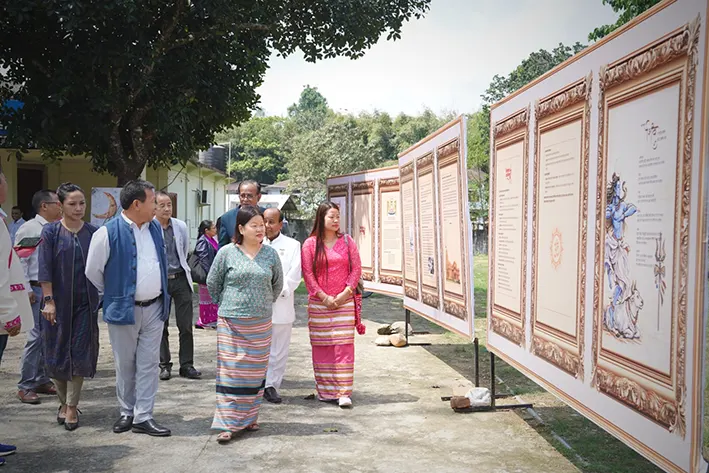
The event, organised by the art and culture department in collaboration with RGU, showcased the state’s cultural heritage and fostered engagement among youths through art, history, and dialogue.
Pul also commended the organisers, stating that such initiatives play a vital role in empowering youths and strengthening cultural roots.
Among those present were RGU Vice-Chancellor (i/c) Prof SK Nayak, Art and Culture Secretary Mamata Riba, Joint Director S Mam, RGU Registrar Dr NT Rikam, and keynote speaker Prof Jayadeba Sahoo.
Earlier, Dr Rikam described Somnath as a powerful symbol of India’s resilience and indomitable spirit. He highlighted that the reconstruction of the temple in 1951 sent a strong message about India’s commitment to preserving its heritage and values despite historical adversities.
Riba presented the background and objectives of the Somnath Swabhimaan Parv. She emphasised that the 12 jyotirlingas symbolise universal values such as peace, harmony, and stability. She noted that Somnath’s repeated reconstruction “represents not just physical rebuilding but the continuity of spiritual consciousness and cultural identity.” The initiative, she stated, aims to engage youthsin understanding and preserving this rich heritage.
Delivering the keynote address on ‘Atoot astha ki gaurav gaatha’, Prof Sahoo emphasised that the essence of the celebration “transcends religious or political boundaries and reflects the broader civilisational ethos of Bharat.”
Prof Sahoo also recounted the historical trajectory of the Somnath temple, highlighting its repeated destruction and reconstruction over centuries. He stressed that, “while the physical structure was attacked multiple times, the faith of the people remained unshaken.”
VC Prof Nayak described the Somnath temple as a symbol of India’s enduring self-respect, and encouraged the participants to uphold values of resilience, cultural awareness, and integrity in their personal and professional lives.
The programme also included an award presentation ceremony, where the winners of pre-event competitions were felicitated in recognition of their creativity and participation.
The Somnath Samvaad – Youth Edition created a platform for meaningful dialogue, cultural expression, and youth engagement. It highlighted that the story of Somnath is not confined to a single religious narrative but represents universal values of resilience, harmony, and the enduring quest for spiritual and cultural meaning.