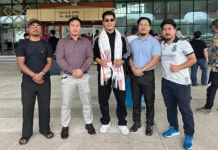
NAMSAI, 3 Dec: In one of the most decisive blows to the dwindling insurgency in Arunachal Pradesh’s eastern belt, two Myanmar-trained hard-core cadres of the United Liberation Front of Asom (Independent) laid down arms before security forces in Namsai district on Tuesday. The surrender of Bhargab Hazarika alias Ban Asom and Astitva Axom marks yet another significant step in dismantling the operational network of ULFA-I in the region.
What makes the development even more consequential is the fact that Bhargab Hazarika personally guided security forces to a concealed location deep inside the forest, leading to the recovery of a lethal MQ-81 rifle, 153 live rounds, and a rifle grenade. The seizure not only exposes the presence of sophisticated weapons in the hideouts of the insurgents but also reflects the depth and trust required for such disclosures. This trust has been gradually earned by the security apparatus after years of reshaping its engagement strategies.
The recent surrender of ULFA-I’s senior leader ‘Major General’ Arunodoi Dohutia has clearly jolted the outfit’s morale. His capitulation triggered a ripple effect, mounting unprecedented pressure on cadres still hiding in the dense forests of Namsai and the adjoining Tirap – Changlang – Longding (TCL) region.
For years, these thick jungles served as a strategic safe haven, an ecosystem where ULFA-I and other insurgent groups raised funds, planned operations, and executed kidnappings and extortion. Numerous families, including business establishments and government officers in Namsai and TCL district have silently endured fear, threats, and illegal financial demands imposed by armed militants. However, the situation today is changing encouragingly and decisively.
This transformation is rooted in the strategic evolution of the security forces. The Assam Rifles, CRPF, and Arunachal Pradesh police have altered their counter-insurgency approach from rigid, high-handed operations of the past to a more humane, community-centric, and intelligence-driven model. The improved bonhomie between civilians and security personnel has become the cornerstone of successful operations.
Villagers of Namsai and TCL districts who once hesitated to speak are now stepping forward with crucial inputs, identifying movement routes, hidden camps, and suspicious activities. The trust deficit has been bridged with patience, transparency, and consistent outreach by security agencies. As a result, intelligence flows more freely, enabling forces to outmaneuver militants who once roamed the region with impunity.