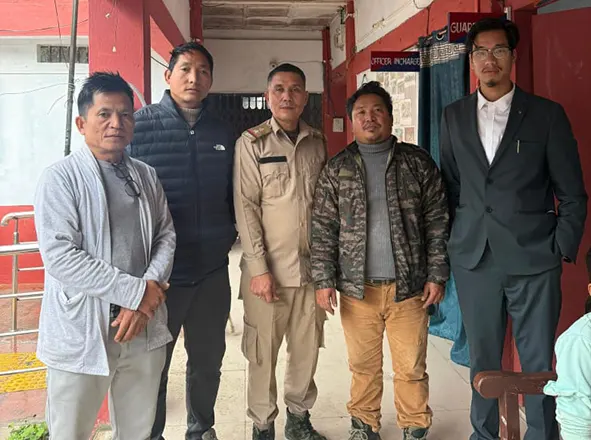
DAPORIJO, 4 Apr: The Subansiri Upper Hydroelectric Project Land Affected People’s Forum has demanded that public hearing for environmental clearance of the Subansiri Upper Hydroelectric Project (SUHEP) be conducted afresh in a fair and transparent manner, ensuring equal participation of all stakeholders.
The forum alleged that the public hearing conducted on 24 March in Singik Hall here in Upper Subansiri district violated the provisions of the EIA notification, 2006, by denying entry to project-affected people.
In a press statement, the forum claimed that several key representatives from the affected areas were prevented from entering the venue. Those who were denied entry included the president of the All Taliha Payeng Lable and Jaring Area Students’ Union, a pressure group from the area where the dam is proposed to be constructed, and executive members of the Downstream Land Affected People’s Forum, who represent the voices of the most impacted people.
“Only those supporting the project were allowed to attend and speak. Speakers were selectively chosen, and opposing voices were systematically excluded,” the forum’s secretary-general Tai Timba stated in a release, terming the entire process biased.
“Even more concerning is the fact that many villagers from project-affected families, especially those opposing the dam, were denied entry into the venue. Barricades were erected, and people were physically prevented from entering. Those who attempted to raise their voices were pushed back and silenced,” he said.
He also stated that many youths from the affected villages were engaged in the AAPSU elections on the day of the hearing, and that their absence meant that informed and articulate voices were missing from such a crucial hearing.
“Without their participation, the process cannot be considered meaningful or complete,” he said.
The forum stated that the Upper Subansiri SP, along with the district administration had invoked provisions under the Arunachal Pradesh Unlawful Activities Prevention Act and Section 163 of the BNSS “deliberately” to restrict the participation of those opposing the project.
It also raised serious concern over the reported excessive presence of police at the venue of the hearing, which, it said, created an atmosphere of “fear and intimidation.”
“A public hearing is meant to be a free and open platform, but what was witnessed was the opposite. People should be able to express their views without fear or coercion,” it said.
“We even requested that at least one representative be allowed to present dissenting views; however, that request was also declined. This is neither transparency nor inclusiveness. It defeats the very purpose of public consultation under environmental law. Every affected person – whether in support of or against the project – has an equal right to be heard,” Timba added.