Monday Musing
[Bengia Ajum]
As the apex student body of state, the All Arunachal Pradesh Students’ Union (AAPSU), gears up for its election, it made me look back to my own rendezvous with the AAPSU.
On 5 October, 2009, I joined The Arunachal Times, and soon my tryst with the All Arunachal Pradesh Students’ Union (AAPSU) began. For people like me, who grew up in the 1990s, the AAPSU was synonymous with the Chakma-Hajong issue. I saw many of my elders take an active part in AAPSU-related activities, especially bandh calls. However, having studied in a boarding school and later in colleges in Delhi and Mysore, I used to see the AAPSU more as a troublemaker than a credible organisation.
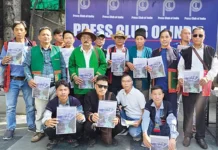
My entire perspective about the AAPSU changed in 2010 when I was invited by then AAPSU president late Takam Tatung to join a team of AAPSU activists on a mission to Changlang and Lohit districts, where clashes had broken out between Chakma settlers and the indigenous population. The team was led by then vice president Nabam Tamar and included Tobom Dai, who later went on to become the general secretary of the AAPSU.
We first went to the M-Pen area in Miao, where refugee settlers had allegedly tried to grab land belonging to Pisi Thuing Singpho. The area was extremely tense, and the Miao administration initially refused to allow the AAPSU team to proceed to M-Pen. However, as the team insisted, heavy security arrangements were made, and we visited M-Pen, where the refugee settlers gave a hostile welcome to the AAPSU activists.
After staying in Miao for a few days, the team moved to the Kathan area in Lohit. In those days, the roads were terrible, and there were no bridges. In Kathan, we had to go on a foot march to inspect land belonging to the Mishmi tribe that was allegedly being illegally occupied by Chakma settlers.
At one point, Chakma settlers and AAPSU activists almost came to blows as a heated argument broke out. The situation was very tense, but the presence of security personnel helped calm it down.
Interestingly, a large number of AAPSU activists were from western Arunachal and were not directly affected by the Chakma-Hajong refugee issue. Yet, everyone was present there as united Arunachalees. I spent almost a week with the team and gained deep insight into the work of the AAPSU. I realised that there are sections of genuine AAPSU activists who deeply care for the future of the state. From being a naysayer, I became someone deeply intrigued by the organisation.
During that time, the Congress party under the late Dorjee Khandu was the ruling party of Arunachal and virtually ran the state at its whims and fancies. The media was still evolving, and opposition parties, including the BJP, were almost non-existent. It was the AAPSU that raised issues concerning the people and kept the government on tenterhooks. The people of the state saw the AAPSU as an opposition voice, and it actively played that role.
However, I have gradually seen the decay of the AAPSU as an organisation since then. Like any other Arunachalee, I was also concerned about the AAPSU and, a few years ago, wrote something suggesting ways for its betterment. The leadership of the AAPSU at that time did not appreciate it and summoned me to the NEFA Club, which serves as the AAPSU office.
Today, many people on social media are raising concerns about the AAPSU and the alleged involvement of money and muscle power in its elections. There is a joke going around that students of Rajiv Gandhi University who stay in rented houses near the university have stopped cooking dinner as every evening they get dinner invite from the candidates.
People are speaking out because they want to see a better AAPSU. There is no doubt that social media has empowered a large section of the population, and people are using it to express their concerns.
However, if there is any organisation that can take on the government in the interest of the people, it is the AAPSU. The union is a pan-Arunachal organisation with cadres across the state. Politicians in the state know this, and therefore successive governments either try to dominate it or appease its leadership by handing out government contract works.
Chief Minister Pema Khandu was recently seen mocking candidates in the ongoing AAPSU election, referring to them as “uncles,” which many perceived as an attempt to belittle the organisation. The weaker and more mocked the AAPSU becomes, the easier life is for the politicians in the state.