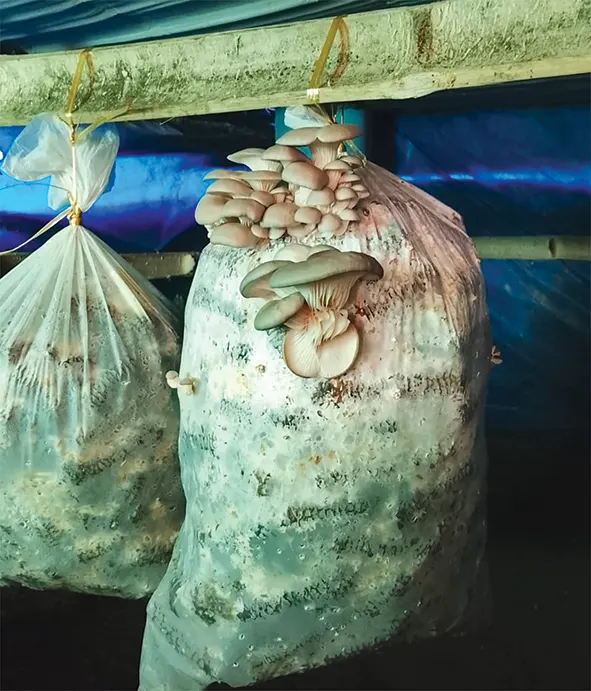
HAYULIANG, 17 Dec: The Krishi Vigyan Kendra (KVK), Anjaw has, for the first time, conducted a trial on oyster mushroom cultivation using maize cobs, finger millet straw and large cardamom stalks with leaves as substrate materials.
The KVK stated in a release that the demonstration has shown encouraging and healthy mycelium growth, indicating that the trial is progressing satisfactorily and is expected to achieve full success.
“The positive results underline the strong potential of oyster mushroom cultivation as a low-cost, eco-friendly and income-generating enterprise for farmers, self-help groups and rural youth in the district,” the KVK said in a release.
It stated that owing to the high-altitude conditions of the district, paddy cultivation is extremely limited and consequently, paddy straw which is commonly used for mushroom cultivation is largely unavailable in Anjaw. At the same time, crop residues such as maize cobs, finger millet straw and large cardamom stalks and leaves are often left unused or burnt after harvesting due to limited awareness and lack of knowledge regarding their potential utilization, the release said.
To address this gap, the KVK initiated the trial with the objective of effectively converting these commonly underutilized agricultural residues into a high-value and nutritious food product, thereby demonstrating an innovative and sustainable approach to agricultural waste management, it said.
The use of locally available biomass not only reduces input costs but also addresses challenges related to the disposal of agricultural residues, the release said.
The initiative aligns with the KVK’s broader objectives of enhancing livelihood opportunities, promoting resource-efficient farming practices and encouraging diversification of farm-based enterprises in Anjaw district as well as across the Northeastern region, the release said.
Building on the promising outcomes of the trial, the KVK said, it was planning to organize capacity-building programmes and field demonstrations to disseminate the technology among farmers and other stakeholders.
“The initiative is expected to contribute significantly to income and employment enhancement, nutritional security and sustainable utilization of agricultural by-products, thereby supporting resilient and diversified rural livelihoods in the district,” the release added.