[ Prafulla Kaman ]
PASIGHAT, 23 Mar: Agriculture scientists serving in different institutions of the state have observed a highly irregular rainfall pattern since June last year, which has had a visible impact on production of both kharif and winter (rabi) crops across the state.
The scientists observed that the unpredictable rainfall pattern is a growing concern for the affected farmers as the combined effect of reduced yields, rising costs, and climatic uncertainty continues to impact farm income and livelihood security.
In many drought-affected districts, cultivated area was reduced and the farmers adopted winter cropping under the contingency crop plan, as advised by the Krishi Vigyan Kendras. But the practice increased their production costs in the name of alternative irrigation. In addition, prolonged dry weather created favourable conditions for crop pests and diseases, causing aggravating crop losses.
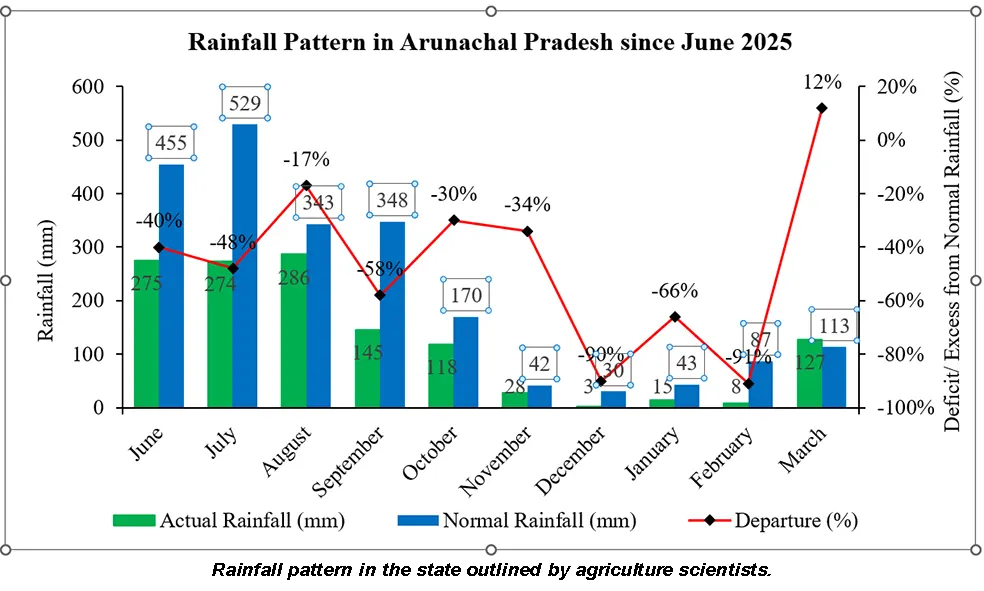
The drought-like situation became more severe during the winter as rainfall deficits of 90.1% to 91.3% were recorded during the months of December last year to February this year. The crucial monsoon period recorded sharp declines, with June and July receiving 39.5% and 48.3% less rainfall than normal average, while September last year witnessed a severe shortfall of 58.3%, adversely affecting crops at critical growth stages.
As per reports, the prolonged dry spell during winter months had a pronounced impact on rabi agriculture in the state, which is largely dependent on rainfall. Crops such as mustard, pulses, and winter vegetables experienced acute moisture stress due to negligible rainfall and declining soil moisture levels.
Dr Dinesh Kumar, assistant professor (agronomy) at the College of Horticulture & Forestry here in East Siang district said that erratic rainfall during last year has disrupted normal sowing schedules and crop growth cycles.
As such, cultivation of major kharif crops, such as paddy, maize, and millets, has been adversely affected due to inadequate soil moisture during sowing and vegetative stages.
Moreover, delayed transplantation of paddy in several areas of the belt resulted in reduced yields and partial crop failure.
He further noted that horticultural crops, including citrus, pineapple, and large cardamom have also suffered, as moisture stress during flowering and fruit-setting stages has led to poor fruit development and increased fruit drop.
Referring to meteorological data, which indicates a persistent rainfall deficit for the last several months, Dr Kumar said the crucial monsoon period recorded sharp declines, with June and July receiving 39.5% and 48.3% less rainfall than normal, respectively, while September witnessed a severe shortfall of 58.3%, adversely affecting crops at critical growth stages.
“Poor germination and uneven crop stand due to inadequate residual soil moisture reduced vegetative growth and delayed flowering in crops like mustard and lentil, and increased dependence on limited irrigation owing to the drying of streams and water sources. It further affected vegetable yields, particularly in cabbage, cauliflower, and leafy greens,” he said.