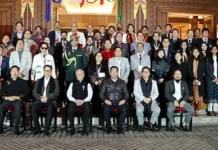
TAWANG, 3 Feb: Around 250 farmers from different parts of Tawang district participated in a ‘plant genetic resources awareness programme’ organised here on Tuesday with the aim of sensitising the farmers to the importance of conserving traditional crop diversity and promoting sustainable agriculture practices.
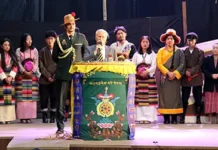
The programme was inaugurated by Tawang ADC Rinchin Leta, in the presence of New Delhi-based NBPGR’s principal scientist Dr KP Mahapatra, NBPGR senior scientist Dr Kuldeep Tripathy, and other dignitaries.
Addressing the participants, Tawang KVK Head Dr A Tripathy informed that the programme was conducted under the NEH programme of the National Bureau of Plant Genetic Resources (NBPGR), New Delhi, in collaboration with the Tawang KVK.
Farmers-Producers director Ngawang Chonzom elaborated the functioning of Farmers-Producers Organisations (FPOs), and emphasised their role in strengthening farmers’ income and contributing to the national economy.
District Kisan Morcha president Tsering Dhondup spoke on various government welfare schemes available for farmers, and urged them to avail of these benefits. He strongly advocated organic farming, and expressed gratitude to the KVK for facilitating farmers’ access to scientific agricultural knowledge and modern farming techniques.
Agricultural Development Officer Tashi Lungtan expressed concern over the disappearance of several local crop varieties, and requested officials from the NBPGR to provide seeds of lost indigenous crops, if available, for their revival.
In his address, Dr Mahapatra highlighted the crucial role of the NBPGR in conserving heritage and traditional crop seeds. He stressed that traditional crops are nutritionally rich and vital for good health, which is why global interest in indigenous food systems is growing rapidly.
Dr Tripathy informed that the NBPGR regularly conducts such awareness programmes across the Northeastern states under NEH schemes to enhance crop quality, productivity, and farmers’ income.
ADC Leta requested the NBPGR officials to take special initiatives for preserving traditional seeds of Tawang, and appealed to the farmers to adopt organic, zero-chemical farming practices.
The farmers were later provided with agricultural and horticultural tools, such as spades, sprayers, cutters, fruit plant saplings, and organic manures. (DIPRO)