BASAR, 17 Feb: Basar MLA Nyabi Jini Dirchi emphasised the need for developing skilled workforce to minimise dependence on workers from outside the state.
“We need to learn to be self-reliant and less dependent upon workforce from outside the state. For this to happen, the youths of the state need to be skilled and engage themselves in productive employment generation activities,” the MLA said at an awareness workshop on the PM’s National Apprenticeship Promotion Scheme (PM-NAPS) and the CM’s Soft Loan Scheme (CMSLS) here in Leparada district on Tuesday.
Stating that the youths must equip themselves with relevant skills, she called for empowering local youths through skill development and productive employment.
Highlighting the initiatives of the department of skill development & entrepreneurship (DSDE), she said that both the central and the state governments are extending attractive stipends and financial support to encourage youths’ participation in apprenticeship and skill training programmes. She urged the youths to avail of the benefits under the PM-NAPS and other flagship schemes by venturing beyond the state for apprenticeship, on-the-job training, and employment opportunities.
Explaining the benefits of various skill development programmes in the local Galo dialect, the MLA appealed to the DSDE to ensure early functionalisation of ITI Basar to enhance access to technical training for local unemployed youths of Leparada as well as adjoining districts.
Leparada Deputy Commissioner Himani Meena, referring to the support extended by the DSDE, stated, “With over 1,000 trades available, ample opportunities exist for our youths to acquire skills and enhance their employability.”
“They must proactively utilise the hand-holding support and training programmes offered by the DSDE to upgrade their skills in their chosen fields and move towards self-employment and self-reliance,” the DC said.
She encouraged young people to make informed choices, utilise the hand-holding support provided by the DSDE, and pursue skill-based self-employment opportunities.
Leparada Zilla Parishad Chairperson Nyamar Riba also addressed the gathering, urging the youths not to rely solely on government jobs but to develop skills that enhance employability and entrepreneurship.
DSDE Deputy Director Gyati Kacho elaborated the benefits of the PM-NAPS and SAPS through a detailed presentation.
Under the PM-NAPS, apprentices receive a monthly stipend of Rs 1,500, with additional support of Rs 1,500 for APST apprentices undergoing training outside the state. Employers provide stipends ranging from Rs 6,800 to Rs 12,300 per month, depending on educational qualifications. Under the SAPS, trainees receive Rs 11,625 per month, along with a one-time travel allowance of Rs 5,000. Overall, trainees may receive between Rs 20,000 and Rs 25,000 per month during apprenticeship training lasting one to two years.
DSDE consultant Tonuruchi Olimman presented the features of the CMSLS and the foreign language training programme with overseas placement support. Under the CMSLS, ITI graduates are eligible for loans up to Rs 3 lakh in two tranches, along with an incentive of Rs 15,000 for purchase of tools and equipment. Beneficiaries who complete loan repayment are entitled to a 25 percent subsidy on each tranche and a 7 percent interest subsidy.
Under the foreign language training programme, the state government bears 70 percent of the training-related expenses, including training fees, medical tests, examination fees, visa processing, boarding, and lodging, while facilitating loans for the remaining 30 percent.
Industries Deputy Director Toyi Rakshap and the National Skill Development Corporation’s state engagement officer Masotmi Zimik also addressed the participants, highlighting various skill and placement initiatives.
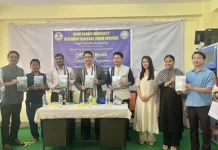
Representatives of empanelled third-party aggregators briefed the attendees on available job roles, vacancies, and training locations. Dedicated stalls were set up at the venue to provide on-the-spot counselling and registration for interested candidates.
The workshop witnessed enthusiastic participation of local youths, college students, PRI members, and aspiring local entrepreneurs, reflecting a growing interest in skill development and apprenticeship opportunities as pathways toward self-reliance. (DIPRO)