YEKSI, 5 Feb: Siang Deputy Commissioner Tayi Taggu on Thursday declared Yaksi as a ‘localised sustainable development village (LSDG)’ village, marking a significant milestone in grassroots development and community-led economic empowerment in the district.
Among others, ZPC Tamat Tatak, PR Director TajingJonnom, Pangin ADC Gamtum Padu, and CO NiyangPertin, along with PRI members, and members of self-help groups (SHGs) were present on the occasion.
The LSDG village initiative has been funded under the 3 percent LSDG component of the state owned resource (SOR) grant for the 2025-26 financial year. The village has been adopted by PR Director Jonnom to ensure focused monitoring, convergence of schemes, and sustainable development outcomes at the grassroots level.
As part of the LSDG activities funded under the SOR grant, livelihood promotion through piggery farming has been undertaken for six SHGs of Yeksi village. Each SHG was provided with seed money of Rs 4 lakh to establish and strengthen piggery units and other income generating enterprises. This intervention aims to enhance household incomes, generate local employment, and ensure sustainable economic security for the community.
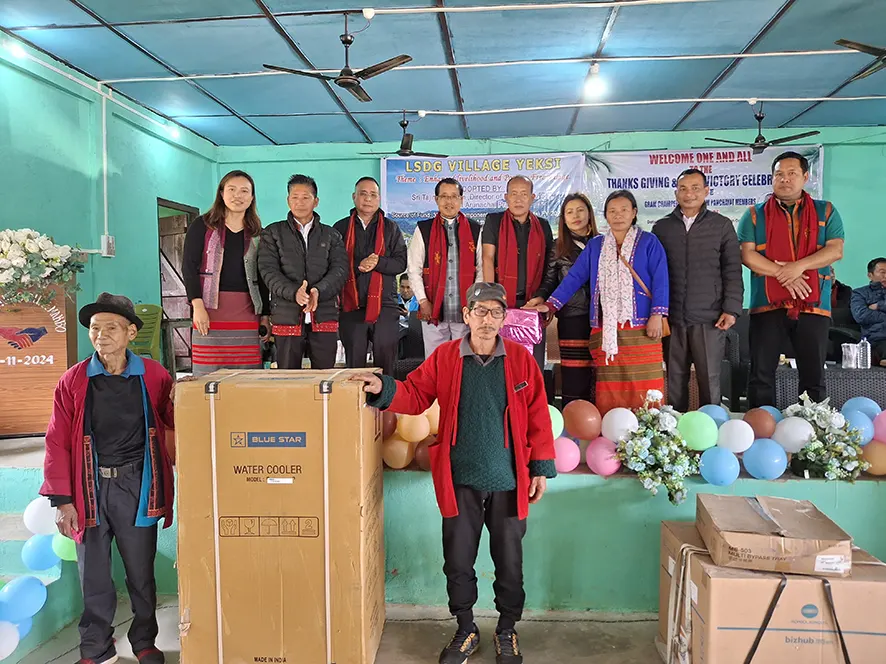
In addition, community facilities were established at the dere to promote shared use of resources and environmentally responsible practices. A printer-cum-photocopier has been provided to ensure affordable documentation services within the village, reducing both time and expenses for residents.
Reusable utensils and safe drinking water facilities have also been provided to replace single-use plastic during meetings and public functions, reinforcing the village’s commitment to sustainable and plastic-free living.
As part of the preparatory activities leading up to the adoption of Yeksi as a LSDG village, a cleanliness and plantation drive was carried out throughout the village. Aesthetic and durable waste collection units were installed at key locations to encourage responsible disposal practices, while bamboo dustbins were installed at each household by the community to support waste segregation.
In his address, the DC emphasised that the LSDG model integrates livelihood generation, community infrastructure, and sustainable practices to achieve holistic village development. He encouraged the beneficiaries to utilise the support effectively and work collectively towards making Yeksi a model poverty-free village.
The ZPC appreciated the initiatives taken to strengthen SHGs, and noted that such targeted livelihood activities significantly contribute to rural economic stability.
Jonnom highlighted that the adoption of Yeksi village reflects the department’s commitment to focused handholding and sustainable, community driven development. He urged the villagers to maintain the assets responsibly and ensure the success of the livelihood initiatives. (DIPRO)