Shapawng Yawng Manau Poi festival underway in Miao
ITANAGAR, 15 Feb: Deputy Chief Minister Chowna Mein has stressed the need to preserve indigenous culture, language and historical legacy, asserting that communities must take the responsibility to safeguard their identity amid the growing influence of globalisation.
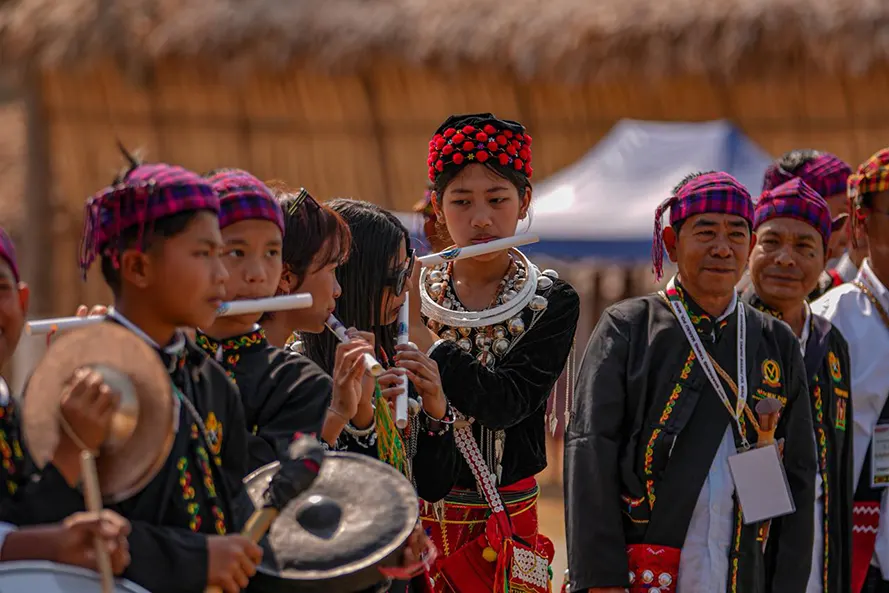
Addressing a gathering at the Shapawng Yawng Manau Poi festival in Miao in Changlang district on Saturday, Mein said the festival is not merely about dance and celebration but features sacred rituals that connect people to their ancestral roots.
He said such events should serve as platforms to reflect on society, heritage and the responsibility of passing cultural values to the younger generation.
Highlighting the challenges of modernisation, he said that while modern education, changing fashion and outside influences cannot be stopped, communities must ensure they do not lose their identity, an official statement said.
“No one will come to preserve our culture; we must protect our culture ourselves,” he said, stressing that language remains the strongest pillar of identity.
The deputy chief minister called for strengthening indigenous language education in schools, so that preservation becomes meaningful rather than symbolic.
Mein also underscored the importance of documenting and digitising ancient manuscripts, oral traditions, folklore and archival materials using modern technology.
He said steps are being taken to digitise rare manuscripts and historical documents for future generations.
Mein also paid floral tributes at Martyr Hill to the unsung heroes of the Singpho community.
He said their sacrifices symbolise courage, dignity and resistance, and stressed the need to document the contributions of local communities, including their role during World War 2.
He also visited the tea and textile exhibition showcasing the rich legacy of the Singpho community.
Mein said the discovery of tea in India traces back to the Singpho tribe of the region, recalling that in 1823, Robert Bruce received tea plants and seeds from Singpho chief Beesa Gaum, which marked a turning point in the genesis of Assam tea. (DCM’s PR Cell, with PTI input)