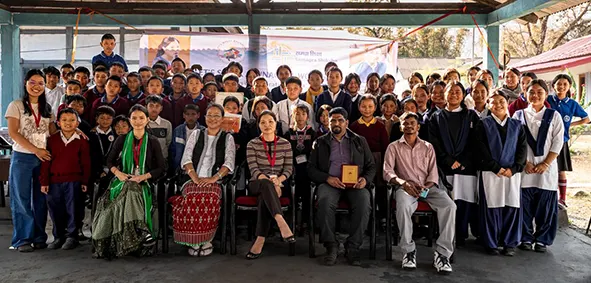
ITANAGAR, 15 Mar: A series of communication and public speaking workshops conducted under the ‘Let’s Speak Arunachal’ initiative, in collaboration with Samagra Shiksha, has reached nearly 1,800 students across six districts, providing structured training in communication, leadership, and critical thinking.
The programme, implemented through 10 workshops across six districts – Namsai, West Siang, Kurung Kumey, Tirap, Leparada, and Papum Pare – covered 10 educational institutions, including government schools and welfare institutions.
The initiative aimed to create inclusive platforms where students could develop confidence in public speaking, articulate ideas clearly, and engage in meaningful dialogue through structured and participatory learning methods.
Workshops were conducted in diverse institutions, including the Gyan Mission Orphanage School, the Donyi Polo Mission School for the Visually and Hearing Impaired, the Oju Welfare Association, Deepak Nabam Living Home, and the PM SHRI Upper Primary School in Lekhi, ensuring participation of students belonging to varied educational and social backgrounds.
During the sessions, facilitators used interactive methods such as guided presentations, role-play simulations, impromptu speaking exercises and moderated debates to encourage active participation rather than passive listening. Students were given opportunities to present their ideas, simulate real-life communication scenarios, and engage in reflective discussions.
According to Let’s Speak Arunachal founder Porsum Ori, the workshops focused not only on improving speaking abilities but also on building confidence, leadership orientation, and civic awareness among young learners.
Ori said the initiative also emphasised on inclusive learning environments, allowing students from different social backgrounds, including those from welfare homes and mission schools, to participate equally in discussions and group activities.
The programme further sought to promote youth empowerment and civic engagement, encouraging students to understand issues related to governance, rights, and responsible citizenship while nurturing their ability to participate in community dialogue and leadership roles.
Officials associated with the initiative noted that communication-based learning programmes complement formal education by equipping students with practical skills often not addressed in traditional academic curricula.
The organisers expressed gratitude to Samagra Shiksha and the education department led by Education Minister Pasang Dorjee Sona, Education Commissioner Amjad Tak, Secretary Duly Kamduk, Samagra Shiksha Deputy State Project Director Sadung Gyadu, ISSE Finance Controller Pura Baku and state project coordinator Nido Sakter for supporting the initiative and enabling workshops to be conducted across multiple districts.
They also acknowledged the cooperation of school administrators, teachers, volunteers, and resource persons whose support helped create a conducive learning environment for students.
Looking ahead, Ori said expanding such initiatives could play an important role in strengthening youth leadership, communication competence and civic participation among students across the state.