[ Dibya Shankar Bhattacharya ]
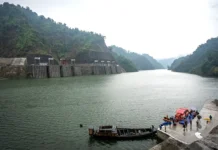
The story of the Siang river does not begin in the verdant, sun-kissed valleys of Arunachal Pradesh, nor does it start in the bustling plains of Assam. It begins in the freezing, desolate heights of the Tibetan plateau, where the water is known not as the Siang, but as the Yarlung Tsangpo.
For millennia, this river has been a silent witness to the rise and fall of empires, cutting relentlessly through the world’s most formidable mountain range. But today, this ancient river has been drafted into a modern, invisible war. It is a war not fought with bullets or fighter jets, but with concrete, turbines, and the terrifying manipulation of water.
In the high-stakes arena of global geopolitics, water is the ultimate weapon of mass coercion, and India is currently staring down the barrel of a loaded gun. The Siang Upper Multipurpose Project (SUMP) is not merely an infrastructure proposal; it is the absolute, non-negotiable armour India needs to survive the impending hydro-hegemony of a hostile neighbour.
To understand the gravity of this situation, one must look at the cold, hard strategic reality unfolding just across the Line of Actual Control.
In the shadowed corridors of Beijing, a master plan of unprecedented scale is quietly moving towards execution. China, acting with the aggressive impunity of an upper riparian state, has officially greenlit the construction of a monstrous 60-gigawatt mega dam at the Great Bend in Motuo county. This is not just a dam; it is a geopolitical chokehold. Placed strategically just kilometres before the river plunges into Indian territory, this infrastructure is designed to give Beijing absolute control over the hydrological destiny of India’s entire Northeast.
In the realm of strategic communications and perception management, the narrative often ignores the most glaring truths. The truth here is that China is racing to establish a mechanism that can artificially choke the lifeblood of millions during the lean winter months, crippling agriculture and inciting manmade droughts. Conversely, during the volatile monsoon season, this same mega structure holds the apocalyptic capability to release billions of cubic metres of hoarded water without warning. Such an engineered flash flood would not just wash away topsoil; it would obliterate Indian military installations, wipe out entire civilian populations, and permanently alter the geography of Arunachal Pradesh. This is not a dystopian fantasy; it is the actual capability of the infrastructure being built right now.
Against this terrifying backdrop, the fierce domestic opposition to the SUMP seems not just naive, but at times dangerously self-sabotaging. The international laws governing transboundary rivers are toothless, relying heavily on the principle of prior appropriation. In the brutal world of international relations, the rule is simple: whoever harnesses the water first, owns the rights to it. By delaying our own infrastructural development through endless bureaucratic paralysis and easily manipulated local protests, India is practically handing over its water sovereignty to Beijing on a silver platter. Building the SUMP is the only legal, physical, and strategic countermeasure available to the Indian republic. By creating a massive storage reservoir on our side of the border, we instantly neutralise the Chinese threat to a large extent. We establish our unshakeable first-user rights on the global stage, legally binding the upper riparian state from altering the natural flow. More importantly, we build a colossal physical shock-absorber. When the malicious release of water inevitably comes from across the border, the Siang project will stand as an impenetrable fortress, swallowing the excess fury of the river and releasing it calmly, thereby saving millions of lives downstream. It is the ultimate sentinel of the frontier.
Beyond the dark shadow of the dragon, there is a profound domestic tragedy that the Siang project is poised to end forever. Every single year, the unregulated monsoon fury of the Siang and the Brahmaputra exacts a blood toll on the people of the Northeast. We have normalised this devastation, reducing the annual destruction of homes, the drowning of livestock, and the loss of human lives to mere statistical footnotes in national newspapers. The media covers the floods, politicians conduct aerial surveys, relief funds are announced, and the cycle repeats. This reactive, band-aid approach is a collective failure of our national conscience. The Siang project represents a definitive shift from victimhood to empowerment. It is an engineering marvel designed to tame the beast. By capturing the violent runoff and regulating the discharge, this multipurpose dam will transform a recurring natural disaster into a perpetual, life-sustaining asset. It is a promise to the mother in Pasighat and the farmer in Majuli that their homes will no longer be at the mercy of the river’s wrath.
Yet, the narrative pushed by certain factions paints the dam as an enemy of the indigenous people and the local ecology. Here, the prevailing discourse often overlooks the profound necessity of aligning ecological preservation with uncompromising national resilience.
The tragic irony is that true environmental degradation is happening right now, unchecked. The annual floods are violently eroding thousands of hectares of ancient forests and fertile land, dragging topsoil into the Bay of Bengal. Furthermore, keeping the border regions locked in a state of enforced primitivism under the guise of ecological preservation is a grave injustice to the tribal communities. The youths of Arunachal are patriotic, fiercely proud of their heritage, but they are also hungry for growth. They deserve world-class avenues of growth right within their majestic homeland, ensuring that their talents build their own communities rather than distant cities. A frontier that is economically vibrant and deeply integrated with modern progress is the most impenetrable armour a nation can possess.
The SUMP is the catalyst that will spark an unprecedented socioeconomic renaissance in this forgotten frontier. The sheer scale of this endeavour will inject billions into the local economy. It is not just about pouring concrete; it is about building a modern civilization in the mountains. Imagine a thriving ecosystem where the monumental, pristine lake created by the dam transforms Arunachal into the undisputed ecotourism capital of Asia. Millions of global tourists will flock to experience this marvel, instantly converting local households into highly prosperous hospitality and cultural hubs. We are not just talking about temporary work; we are looking at a tectonic shift in the employment landscape. The project will unleash an economic vortex, spawning an infinite matrix of multi-million-dollar ancillary industries overnight – ranging from luxury river cruises and world-class water sports infrastructure to high-end commercial fisheries and premium organic farming, empowered by perennial irrigation grids. The indigenous populace, as the true custodians of this frontier, are not merely bystanders to this progress; they are rightfully entitled to, and will reap the absolute benefits of, these vast and varied avenues of employment. It will instantly generate thousands of direct, high-paying jobs for the local youths, turning them into the architects of their own prosperity. The project demands the construction of heavy-load-bearing, all-weather highways, cutting-edge telecommunications networks, and robust bridges that can carry the weight of both military convoys and commercial freight. This infrastructure will permanently overcome the geographic isolation of the Upper Siang region. By providing world-class healthcare, education, and connectivity, the project will ensure that the indigenous people become the primary shareholders in the wealth generated from their land. When a border population is economically thriving, culturally secure, and deeply rooted in their modernised ancestral homes, they become an impenetrable human wall that no foreign army can breach.
However, the dam construction must follow a multidisciplinary, risk-informed approach, balancing development with environmental sustainability and community welfare, ensuring long term safety and resilience. The dam construction must shift from a purely engineering project to a multidisciplinary risk managed intervention, integrating seismic safety, climate resilience, ecological balance and community rights.
Finally, we must confront the hypocrisy of the global climate discourse. India is a rising superpower, burdened with the monumental task of pulling hundreds of millions out of poverty while simultaneously honouring its international commitments to reduce carbon emissions. We cannot power the factories of a new, self-reliant India only on the erratic promises of wind and solar alone, nor can we continue to choke our skies with the exhaust of imported coal. The immense kinetic energy of the Siang river is a gift of nature waiting to be harnessed. The project will generate thousands of megawatts of absolutely clean, firm base-load renewable power. It is a green powerhouse that will drastically slash India’s carbon footprint, proving to the world that economic industrialisation and environmental stewardship can coexist seamlessly. The project channels its chaotic energy of the Siang river into the organised progress of human civilisation.
It is felt that the time for intellectual debate and giving a platform to orchestrated dissent has long passed. The water is flowing, the clock is ticking, and our adversary is not waiting for us to reach a consensus. The SUMP is a profound test of India’s political will and national resolve. It is a bold, unapologetic declaration that we will not be held hostage by foreign hydro-engineering, nor will we allow our own citizens to be perpetually devastated by natural calamities. It is a testament to an aggressive, resurgent India that recognises its vulnerabilities and builds monuments of concrete and steel to eradicate them. We must reclaim the narrative. We must tell the true story of the Siang -not merely as a tragedy of displaced trees, but as an epic saga of national survival, border prosperity and uncompromising sovereign strength. (The writer is an Army veteran, strategic affairs expert and a practicing advocate in the Gauhati High Court)