[ Pisi Zauing ]
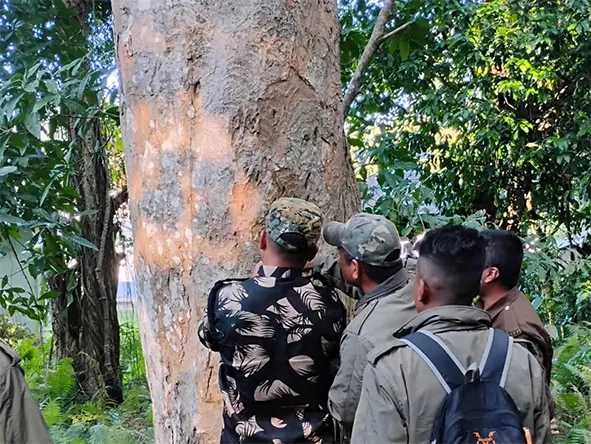
MIAO, 10 Dec: With the sixth cycle of the All India Tiger Estimation 2025-26 underway, Namdapha’s frontline protection staff have once again stepped into one of the most demanding wildlife exercises in the country.
The tiger estimation is more than a periodic scientific process; it is the backbone of India’s conservation strategy, and the people who implement it in the field remain the true pillars of this national effort.
In Namdapha, where dense forests, harsh terrain, unpredictable weather and limited communication infrastructure define the landscape, the task becomes even more challenging.
Yet the frontline personnel have approached it with renewed confidence and discipline with Field Director and CF A. Deka at the helm.
A few decades ago, tigers were frequently sighted across Namdapha, from the core areas to buffer zones and even close to human habitations. The landscape was rich with the presence of not only Bengal tigers, but also leopards, clouded leopards and, in higher elevations, even snow leopards moving across their natural ranges.
However, uncontrolled poaching by certain sections of people pushed these species to the edge of near local extinction. The disappearance of apex predators also threatened the ecological balance of the entire forest. What once was a thriving big-cat landscape began witnessing a disturbing silence.
The turning point came with sustained conservation interventions. Over the years, Namdapha management intensified protection, brought in stricter surveillance, strengthened patrolling and built a stronger relationship with local communities.
Gradually, poaching networks were disrupted. The ground teams, working day and night, prevented further poaching of these endangered species. This consistent effort, combined with scientific monitoring and strong legal action, has slowly reversed the decline. The tigers may not have returned to its former abundance yet, but it has certainly been protected from disappearing altogether.
To meet the requirements of the present tiger estimation, field teams were trained in advanced data collection methods including camera-trapping protocols, sign recognition, line transects and digital geo-tagging. Technology today plays a vital role, but its success depends entirely on the dedication of trained manpower. The guards and watchers of Namdapha have shown exactly that dedication.
Another encouraging change has taken place outside the forest. The public has gradually begun to understand the ecological importance of tigers and their role in maintaining a healthy ecosystem. Communities that once remained indifferent now recognise tiger as a symbol of their forest heritage.
As India undertakes another national estimation, Namdapha stands as an example of how determination on the ground can save a species previously pushed to the brink. And, it is these frontline heroes-quiet, disciplined and resolute-who continue to protect the future of big cats in one of India’s most precious landscapes of wilderness.