[Indu Chukhu]
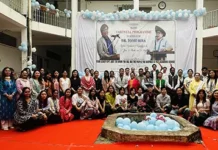
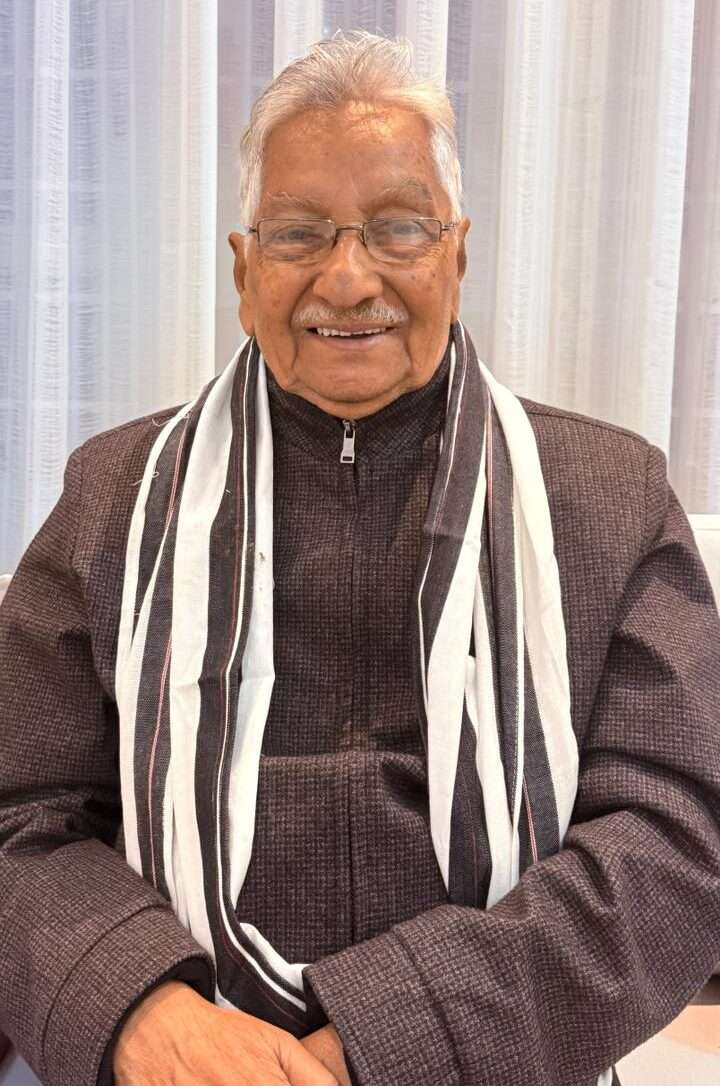
ITANAGAR, 7 Jan: Veteran journalist P.B Das Gupta (87), founder of the then Itanagar Press Club (now Arunachal Press Club) and the All Arunachal Pradesh Union of Working Journalists, was on a week-long visit to the land of dawn-lit mountains, where he served for 24 years.
Born on 2 April, 1940, in Chittagong (Purva Bangla), then East Pakistan and now Bangladesh, Das Gupta fled the region at the age of 10 and settled in a rehabilitation camp in Lumding, Assam. He completed his matriculation in Lumding and pursued college education in Guwahati for two years. However, due to pneumonia before his examinations, he returned to Lumding and later began teaching in a Hindi school in Dimapur, Nagaland.
He subsequently moved to Manipur, which had better educational institutions, and worked in a Hindi school there. For about a year, he also worked as a food supplier to the Assam Rifles along with an army contractor, a period marked by many hardships.
After migrating from East Pakistan, Das Gupta became a member of the Rashtriya Swayamsevak Sangh (RSS) at the age of 10. He recalled how his interest in the RSS began in 1950 when Eknath Ranade, later founder of the Vivekananda Kendra, delivered a lecture in the rain and refused an umbrella, saying he wanted to be drenched with everyone else. Deeply moved by the incident, Das Gupta remained associated with the RSS and later became an RSS pracharak while studying at a night college in Manipur.
During the Emergency in 1975, Das Gupta was jailed for 18 months in Imphal. After his release, he became general secretary of the Janata Party in Manipur, with the objective of defeating the Congress and the Indira Gandhi-led government.
Das Gupta began his journalism career with Hindustan Samachar and later joined the Press Trust of India (PTI) in 1977 as a correspondent from Manipur, marking a new chapter in his career. Alongside journalism, he continued teaching and remained actively involved with the RSS. He was a founder member of the Manipur Journalist Union (now the All Manipur Journalist Union) and served as its president from 1977 to 1980.
He later served as PTI correspondent-cum-manager in Kolkata before being transferred to Arunachal Pradesh as PTI regional manager.
Das Gupta was the founder president of the Arunachal Pradesh Union of Working Journalists (1981) and the Arunachal Press Club (1982).
He left Arunachal Pradesh in 2004 and continued working as a journalist for four more years after retirement.
Recalling the peak years of insurgency in Manipur, Das Gupta spoke of an incident when armed men entered the PTI office questioning the use of the word “guerrilla” instead of “freedom fighter.” He later used the term “underground insurgent,” noting the challenges journalists faced during that period.
Observing the present infrastructure development in Arunachal Pradesh, Das Gupta said it felt like a dream come true. He recalled that when he first arrived in Itanagar, the Ramakrishna Mission Hospital was just beginning. He also remembered associates such as Dr. Joram Begi, the first graduate from the Nyishi community, late Nabam Atum, and others associated with the development of Donyi Poloism.
Through his reporting, several developments became visible to the public at a time when the state had few newspapers. One such report during the Assam agitation and the 1987 Assam riots highlighted the plight of people affected by the conflict between the Assamese and Bodo communities in the Kokila-Sonajuli area along the Arunachal-Assam border. His report, headlined “20,000 People Under the Sky,” described how thousands were deprived of food, water, and shelter. The report created widespread impact, was covered by the BBC, and led to immediate relief measures by the Assam government.
He also recalled an incident from 25 December, 1996, when a newly formed underground outfit, the Liberation Tiger of Arunachal, issued a press release outlining its objectives. Das Gupta said he chose not to publish it, emphasising the importance of self-censorship and gatekeeping as essential elements of journalism.
A mentor to many journalists, bureaucrats, and politicians, Das Gupta recalled former chief minister Gegong Apang as someone open to criticism who never pressured journalists or took personal grudges.
Urging young journalists to be strong and responsible, Das Gupta expressed happiness at the growth of media in Arunachal Pradesh, noting the presence of numerous newspapers today compared to the time when there were none. With his initiative, the state’s first newspaper, Echo of Arunachal, was launched.