[ Pisi Zauing ]
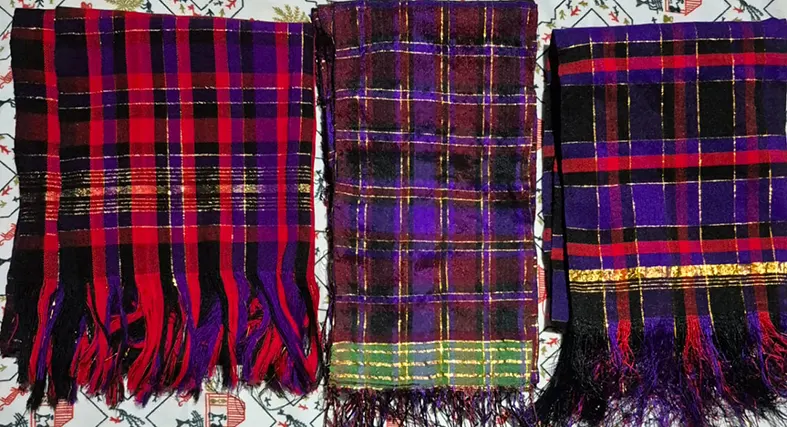
MIAO, 23 Dec: The Miao Singpho Ramma Hpung (MSRH) has accused certain non-Singpho communities of deliberately and systematically appropriating Singpho traditional dress patterns, warning that continued encroachment will compel the community to seek legal and constitutional remedies.
The MSRH has categorically stated that the unauthorised use, reproduction, and misrepresentation of Singpho dress patterns by some tribes amounts to cultural misappropriation – a violation not only of ethical norms but of constitutional safeguards guaranteed to indigenous communities under Articles 29 and 49 of the Constitution of India, which protect the right to conserve distinct culture and heritage.
What has alarmed the MSRH is the reported attempt by certain groups to seek geographical indication (GI) registration for dress patterns historically and exclusively associated with the Singpho people. The MSRH has termed this move “a calculated legal intrusion” and “an attempt to institutionalise cultural theft.”
“Applying for GI tags for Singpho designs is not ignorance, it is intent,” the organisation asserted. “It seeks to rewrite ownership through paperwork, erasing historical truth and depriving the rightful community of recognition and control over its heritage.”
The MSRH warned that such actions could amount to fraudulent misrepresentation, as GI laws are designed to protect the genuine origin of cultural products, not to legitimise appropriation by those with no historical claim.
Speaking on the issue, MSRH president Gamseng Singpho expressed deep anguish and firm resolve. He also addressed an internal concern that has further complicated the matter – instances where Singpho women married into other communities have allowed Singpho dress patterns to be used for the benefit of non-Singpho groups.
“This is not a personal matter; it is a collective responsibility,” he said. “Marriage does not dissolve cultural ownership. No individual has the moral or legal authority to transfer or dilute community heritage.”
He cautioned that such actions, whether intentional or inadvertent, weaken the community’s collective claim and expose Singpho culture to further exploitation.
While the MSRH has refrained from naming the tribes involved, citing the need to preserve social harmony, the organisation made it unequivocally clear that patience has limits. “Our restraint must not be interpreted as silence, and silence must not be mistaken for acceptance or surrender,” the MSRH warned.
The MSRH issued an appeal to all groups concerned to immediately cease the use, display, promotion, or commercial exploitation of Singpho dress patterns, whether in festivals, documentation, applications for GI tags, or public representation.
“Cultural theft is not a benign act,” the MSRH stated. “It fractures trust, deepens social fault lines, and breeds long-term resentment. True unity among indigenous communities cannot be built on the erasure of another’s identity.”
The MSRH has issued a firm appeal to all groups concerned to immediately cease the unethical use of Singpho dress patterns and to respect the rightful cultural ownership of the Singpho people. The organisation emphasised that true harmony lies not in imitation but in mutual respect where every tribe celebrates its own heritage without encroaching upon another’s.
Reaffirming its commitment, the MSRH declared that it will continue to stand as a guardian of Singpho cultural integrity, dignity, and historical rights. “Our traditions are not for appropriation,” the organisation asserted. “They are our inheritance, our pride, and our responsibility to defend today and to pass on intact to generations yet unborn.”
The MSRH reaffirmed its unwavering commitment to defend Singpho heritage with dignity and determination. “We will not allow our ancestors’ legacy to be diluted, repackaged, or claimed by others. Our culture is not negotiable,” it said.