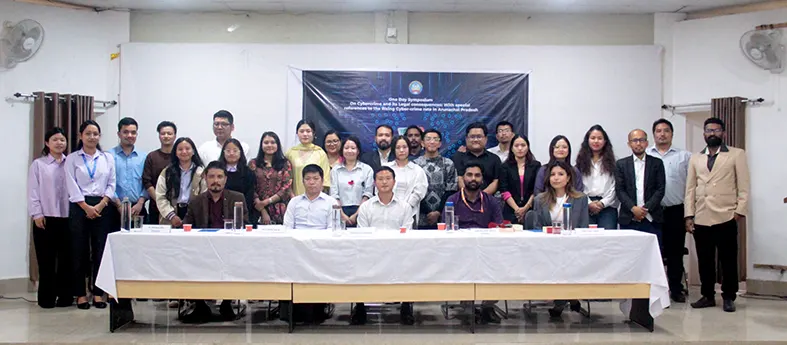
RONO HILLS, 30 Mar: A symposium on ‘Cybercrime and its legal consequences: With special reference to the rising cybercrime rate in Arunachal Pradesh’ was organised by the Kirter Dini Bagra Welfare Society, in collaboration with the Centre for Distance and Online Education (CDOE), Rajiv Gandhi University (RGU) here on Monday.
Addressing the participants, CDOE Assistant Professor Dr Margum Ado underscored the urgent need for awareness, digital responsibility, and institutional preparedness in addressing cybercrime.
In his keynote address, Itanagar Police Station Cyber Crime Sub-Inspector Bullo Hassang provided a comprehensive overview of the evolving nature of cybercrime. He highlighted common threats such as ATM skimming, UPI frauds, phishing links, and fake online marketplaces, noting that many crimes exploit the human element, including greed, urgency, and lack of awareness.
He emphasised that cybercrime often targets digital assets and vulnerable groups such as senior citizens, and stressed the importance of immediate reporting, maintaining transaction records, and understanding basic cyber safety practices. He also underlined the role of daily vigilance, responsible online behaviour, and awareness of OTP/privacy protocols.
Constable Tilling Tajung of the cyber crime department, Itanagar, placed special emphasis on the importance of two-step verification and cautioned against the use of multiple or unsecured accounts. He also provided insights into the legal framework governing cyber offences, including provisions related to fraud, identity theft, and online harassment.
Highlighting the significance of legal awareness, he noted that understanding the law is essential not only for prevention but also for effective redressal, and encouraged the participants to remain informed about their rights and the legal remedies available to them.
Providing an industry perspective, Doimukh-based Axis Bank branch head Toko Tada spoke about how financial institutions are strengthening systems to counter cyber threats, including fraud detection mechanisms and customer awareness initiatives. He noted that while technology is advancing, cybercriminals are equally adaptive, making continuous awareness and institutional safeguards crucial.
Further expanding on banking-related cyber risks, RGU-based Bank of Baroda branch manager Rishabh Singh Solanki elaborated the types of banking frauds, including loan app scams, fake job offers, phishing, and social engineering tactics. He explained how fraudsters manipulate users into sharing sensitive information, and highlighted the importance of secure banking practices, verification of links, and avoiding suspicious applications. He stressed that even a single click on a malicious link can compromise personal and financial data.
The symposium highlighted the rapid rise of cybercrime in Arunachal, largely driven by increased digital adoption and a growing dependence on online platforms. A key concern identified was the role of human behaviour, particularly lack of awareness, which continues to be a major vulnerability exploited by cybercriminals.
The discussions underscored the increasing misuse of UPI platforms, OTP-based frauds, and social engineering techniques that manipulate individuals into compromising sensitive information.
Emphasis was laid on the importance of cyber hygiene practices, including exercising caution during online transactions, safeguarding personal data, and staying informed about evolving threats.
The participants were encouraged to adopt preventive measures such as avoiding unknown links and suspicious applications, verifying the authenticity of financial transactions and sources, reporting cyber incidents promptly to authorities, and maintaining continuous awareness to ensure digital safety.
The session concluded with summation remarks by RGU Sociology Assistant Professor Dr Kiri Taso, who emphasised that cybersecurity is a shared responsibility requiring collaboration between individuals, institutions and law enforcement agencies.
The symposium witnessed enthusiastic response, with the participation of over 70 attendees, including students, research scholars, and faculty members. It also drew participants from outside RGU, reflecting its wider relevance and outreach.
The diverse gathering fostered meaningful discussions and exchange of ideas, contributing to the overall success of the programme.