[ Prem Chetry ]
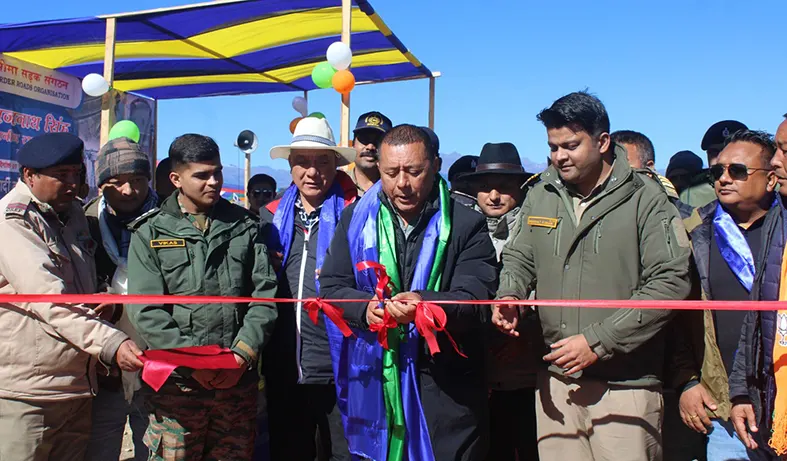
DIRANG, 7 Dec: Dirang MLA Phurpa Tsering inaugurated the Chander-Tungri road in West Kameng district on Sunday, in the presence of 97 RCC OC Prabhat Kumar and 429 RMPL OIC Captain Vikas Dwivedi.
Expressing gratitude to the Government of India, Tsering said, “This rural road connectivity not only ensures socioeconomic development for the villagers; it is also aligned with Prime Minister Narendra Modi’s vision of ‘Sabka Saath, Sabka Vikas’.”
He added that the new connectivity would enhance rural economy, ease movement, and promote rural tourism in villages that have worked hard for development over decades.
In a major boost to regional connectivity and national security, Defence Minister Rajnath Singh virtually inaugurated one of the vital road projects from Chander to Tungri on Sunday. The project has been developed under the Government of India’s ambitious ‘125 Infrastructure Project’.
The inaugurated roads fall under the jurisdiction of Project Vartak Chief Engineer Brigadier Sanjeet Singh and 14 Border Roads Task Force Commander Puneel Kumar.
Constructed in a geographically sensitive belt, these roads will play a crucial role in strengthening local mobility, defence preparedness, and socioeconomic development.
The inauguration marked a significant milestone in the government’s push to enhance last-mile connectivity in forward areas. The road projects lie in a region known for its strategic importance, challenging terrain, operational constraints, and year-round logistical demands, making their completion a noteworthy achievement.
The Chander-Tungri road will serve as a critical transit artery supporting defence logistics and border security operations. Stretching across a tactically important alignment, it will provide a direct and efficient route for the movement of military convoys, equipment, and operational reserves.
Built with reinforced pavements and widened stretches at vulnerable points, the road is expected to substantially upgrade infrastructure readiness in nearby forward sectors, reaffirming the nation’s commitment to enhancing border preparedness while also uplifting local communities.
Beyond defence, the road will bring tangible benefits to the local population by connecting multiple villages that previously relied on longer and less reliable tracks. Improved accessibility is expected to boost economic activity, encourage tourism, and improve the delivery of essential services.
With the inauguration of this project, the region stands on the threshold of a transformative phase. The dual benefits of improved civilian mobility and strengthened defence capability underline the government’s broader vision for integrated infrastructure development in remote areas.