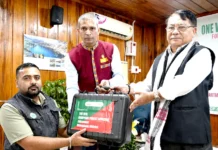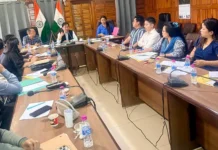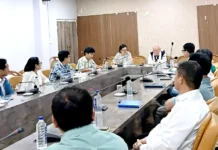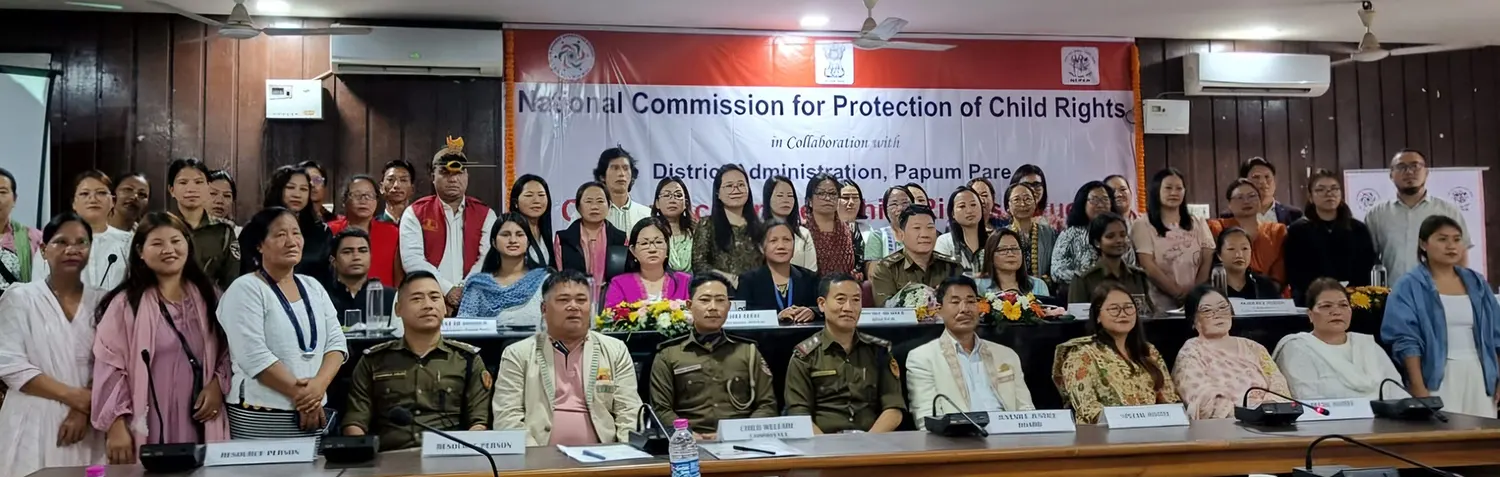
YUPIA, 12 Mar: A state-level conference on key issues concerning child rights was organised by the National Commission for Protection of Child Rights, in collaboration with the state’s women and child development department and the Papum Pare district administration at the ZPC conference hall here on Thursday.
In her address, Arunachal Pradesh State Commission for Protection of Child Rights (APSCPCR) Chairperson Anya Ratan emphasised the collective responsibility of all stakeholders in creating a safe environment for the development of children.
“Ignorance of the law cannot be an excuse,” she said, highlighting the importance of institutions such as the Juvenile Justice Board (JJB) and the Child Welfare Committee (CWC) in safeguarding children’s rights.
Stating that lack of coordination often affects effective implementation of child protection laws at the grassroots level, she called for greater cooperation among stakeholders. She also urged the appointing authorities, including the DCs and the women and child development department, to ensure that appointments to JJBs and CWCs strictly follow the prescribed qualifications and experiences criteria.
Pointing out the mushrooming of private schools without proper authorisation in the state and incidents of bullying and suicides in some institutions, Ratan said that many schools are functioning without recognition or adequate monitoring.
She informed that around 32 unrecognised private schools are reportedly operating in the Itanagar Capital Region alone, many lacking proper infrastructure and employing underpaid and under-qualified teachers, resulting in poor educational outcomes.
Referring to a recent bullying incident at a Sainik School that reportedly led to the death of a student, she informed that the APSCPCR has initiated steps towards the enactment of an anti-ragging legislation, which will soon be tabled. She also raised concerns over misuse of social media among children, and urged parents to monitor their children’s internet usage and online interactions.
Papum Pare DC Vishakha Yadav stated that nearly one-third of the country’s population consists of young people, making it essential to nurture and guide them properly. She highlighted growing concerns such as suicides among youngsters and cases registered under the Protection of Children from Sexual Offences Act (POCSO). The DC stressed the importance of awareness and community involvement in addressing these issues.
Referring to recent ragging incidents in some private schools, the DC informed that the district administration is preparing a strict standard operating procedure for residential schools, which she said will be enforced soon.
Superintendent of Police Taru Gusar emphasised the importance of responsible parenting and proper guidance. He highlighted practical issues prevalent in the state, including concerns related to underage domestic helpers and juvenile problems such as drug addiction and exploitation, and called for collective efforts from all stakeholders.
APSCPCR member Miti Libang also spoke.
During the technical session, Superintendent of Police (Crime) Shivendu Bhushan conducted a session on bullying and cyber-bullying in schools, focusing on their identification, prevention, and response mechanisms.
Chairperson of the Child Welfare Committee, ICR, Taba Zim conducted a session on building a safe environment for children, and emphasised the role of teachers, parents, and institutions in empowering and protecting children.
Member of the Juvenile Justice Board, ICR, Lekha Asha Nyelam conducted a session on issues related to child trafficking and mechanisms for prevention and intervention.
CDPO Bahi Koyu delivered a presentation on the Sexual Harassment of Women at Workplace (Prevention, Prohibition and Redressal) Act, 2013, highlighting provisions for prevention, prohibition, and redressal of sexual harassment at workplaces.
During the open house discussion, the resource persons answered the queries of the participants.
Government officials, teachers, anganwadi workers, police officials, and GBs, among others, attended the programme. (DIPRO)