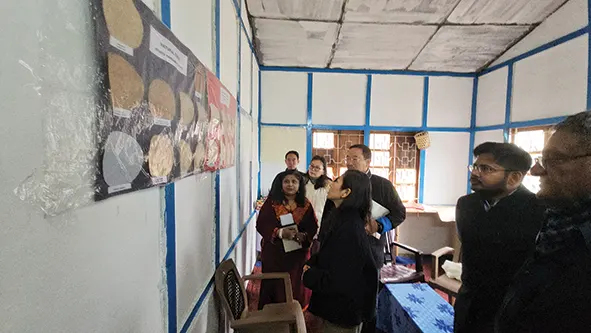
TAWANG, 21 Mar: A two-day workshop on ‘Development of Monpa handmade (Mon-shugu) paper’ commenced on Saturday at the Tsangbu Monpa Handmade Paper Centre here, aiming to revitalise and modernise this unique indigenous craft.
The programme, sponsored by the directorate of science & technology and the Khadi & Village Industries Commission, is being organised by the Kumarappa National Handmade Paper Institute (KNHPI), Jaipur, in collaboration with Youth Action for Social Welfare (YASW), Tawang. The workshop is being conducted under the mentorship of Dr Rakesh Kumar Jain, technical expert with the United Nations Industrial Development Organisation (UNIDO) and former director of KNHPI and CPPRI.
Welcoming the participants, KNHPI scientist Dr Saakshy provided an overview of the workshop, highlighting its focus on innovation, product diversification, and market expansion.
Tawang Deputy Commissioner Namgyal Angmo in her address emphasised the cultural significance of Mon-shugu, describing it as an integral part of Monpa identity. She encouraged exploring its broader commercial applications beyond traditional uses, such as printing religious texts and packaging.
In his keynote address, Arunachal Pradesh Khadi & Village Industries Board Chairman Maling Gombu underlined the importance of upgrading traditional paper-making practices through scientific methods. He stressed the need to engage local youths and artisans, noting the abundant availability of Mon-shugu bark in the region. He added that eco-friendly design interventions and product innovation could open new livelihood opportunities.
During the technical sessions, experts including Dr RK Jain and Dr Saakshy introduced the participants to chemical-free pulping techniques, natural dye applications, and value-added product development. They highlighted the growing demand for Monpa handmade paper in premium segments such as archival-quality paper, eco-friendly packaging, and export-oriented specialty products.
The workshop has drawn enthusiastic participation of local artisans and youths, who are actively engaging in hands-on training and discussions. The initiative focuses on blending traditional knowledge with modern techniques to enhance quality, sustainability, and market competitiveness.
The organisers expressed optimism that such initiatives would strengthen rural industries, promote eco-friendly alternatives to single-use plastics, and create sustainable livelihood opportunities. (DIPRO)