[ Prem Chetry ]
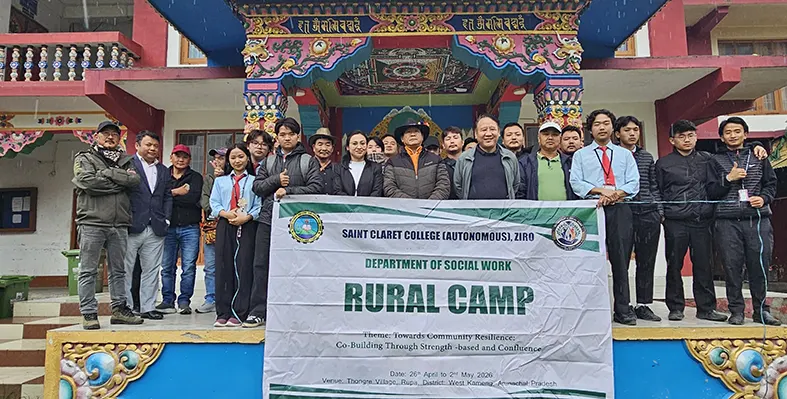
RUPA, 4 May: Eleven fourth-semester bachelor of social work (BSW) students from Saint Claret College Ziro (SCCZ) participated in a six-day residential rural camp themed ‘Towards Community Resilience: Co-building through Strength-Based and Confluence’, at Thongre village in Rupa in West Kameng district.
The camp, a part of the BSW programme, was designed to bridge the gap between classroom instructions and real-world social work practice.
During the weeklong camp, the students engaged with community members across generations, from schoolchildren to village elders.
Day one was devoted to orientation and rapport-building, beginning with introductions and community greetings, followed by a transect walk across the village to observe land use, natural resources, infrastructure, and lived spaces. During the day, they held group discussions with village elders, who shared oral histories, traditional livelihood practices, and their perspectives on changing community dynamics in the region.
On day two, the students conducted a baseline survey across households and took part in hands-on participatory rural appraisal exercises, including social mapping, resource mapping, seasonal calendars, and Venn diagrams that visually represented the relationships between the village and key institutions.
On the third day, they visited the Government Higher Secondary School (GHSS) Rupa, where they interacted with schoolchildren on health and hygiene. The session included live demonstrations of proper handwashing techniques and safe waste disposal methods.
The fourth day was dedicated to youth engagement and drug awareness, highlighting the consequences of substance abuse in the society.
The students organised an awareness march along with the students of GHSS Rupa from the school campus to the taxi stand, followed by a street play.
In the afternoon session, the students held an interactive session with members of the TVC and ARAYA on the issue of the drug menace in the society.
The fifth day focused on completing the baseline survey and collecting oral histories. They also met members of six SHGs and discussed local economic practices, credit and savings, and livelihood programmes.
On the final day, the students conducted a cleaning drive, followed by a plantation programme in the gonpa campus of Thongre village.
During the valedictory session, the students presented consolidated findings from the camp, assessment data, PRA outputs, priority issues identified, and recommendations.
Village leader Sonam Punchu, community members, women groups of the village and students attended it.
Assistant Professor Dr Mousumi Saikia guided the students during the camp.