Staff Reporter
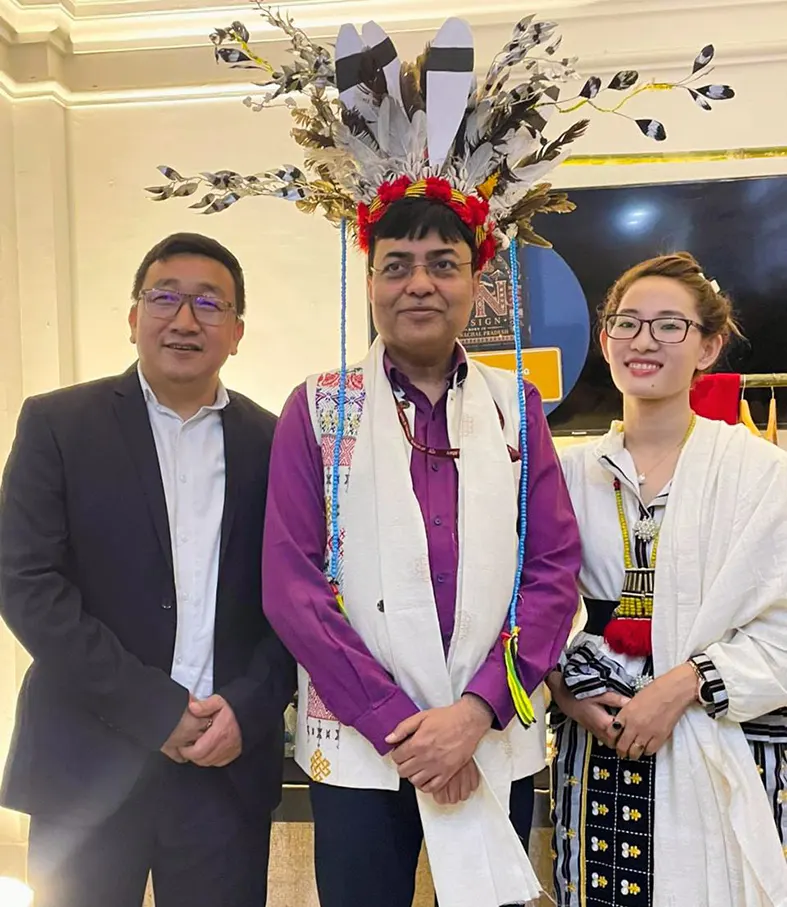
ITANAGAR, 4 May: Arunachali designer Yachi Natung Taniang’s works were featured in the Padma Doree exhibition, organised by the North Eastern Handicrafts and Handlooms Development Corporation (NEHHDC) at the Tranvancore Palace in New Delhi from 1-3 May.
Padma Doree is a recently launched cross-regional Indian textile initiative that blends two rich heritage crafts: eri (ahimsa) silk from Northeast India and the Chanderi weaving of Madhya Pradesh.
Taniang is the managing director of Tribal Pattern. Her contribution highlights the artistic depth and cultural significance of Arunachal Pradesh’ indigenous patterns, bringing regional identity to the forefront.
The Padma Doree exhibition aimed at bridging India’s regional craft traditions and expanding global market access. The project integrates eri silk from the Northeast with the famed Chanderi weaving tradition of Madhya Pradesh, marking a significant push to connect the country’s eastern, central and western craft ecosystems.
To establish a strong foundation for the initiative, the NEHHDC, a central public sector enterprise under the Ministry of Development of the Northeastern Region (DoNER), recently signed a memorandum of understanding with Madhya Pradesh’ District Archaeology, Tourism and Culture Council (DATCC).
The DATCC is an established organisation specialising in promoting and preserving archaeological, cultural and tourism-related activities, and it promotes the traditional Chanderi weaving technique.
The initiative has received a funding of Rs 4.84 crore. It seeks to create a sustainable textile value chain by linking raw material production from the Northeast with established weaving clusters in central India.
“Eri silk sourced from both lower and upper Assam, as well as Arunachal Pradesh, Nagaland and Meghalaya, will be transported to Chanderi for weaving,” said DoNER Ministry Joint Secretary Neeraj Kumar.
“The final product blends the softness and thermal properties of eri silk with the lightweight, sheer texture of Chanderi fabric, creating a unique textile positioned within the growing segment of indigenous luxury,” he said.