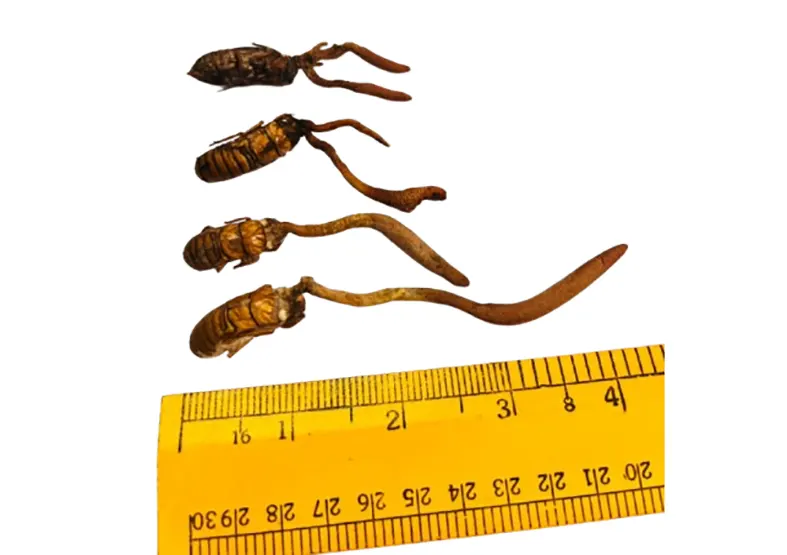
PASIGHAT, 5 May: A mushroom exploration programme led by Pasighat-based Central Agriculture University Assistant Professor Dr Senpon Ngomle, along with Dr Yengkhom Disco Singh and P Chattopadhyay, has led to the discovery of Cordyceps mushroom in East Siang district.
The finding is considered highly significant from medicinal and biogeographical perspectives. The species, belonging to the genus Cordyceps, is among the most economically and therapeutically important medicinal fungi worldwide. These fungi are recognised for producing a wide spectrum of pharmacologically active secondary metabolites, including cordycepin, adenosine, ergosterol, cordycepic acid, nucleosides, sterols, peptides and biologically active polysaccharides possessing potent immunomodulatory, antioxidant, anti-inflammatory, antimicrobial, antiviral, antitumor, antidiabetic, hepatoprotective, nephroprotective and neuroprotective activities, it said.
Extensive pharmacological and biomedical studies have demonstrated their therapeutic potential in cancer management, metabolic disorders, immune dysfunction, chronic inflammatory diseases, oxidative stress and tissue repair mechanisms, the university informed.
Globally, Cordyceps are considered highly prized medicinal bioresources in traditional Himalayan ethnomedicine as well as modern nutraceutical and pharmaceutical industries. Wild Cordyceps species command extraordinarily high market prices and are often referred to as ‘Himalayan gold’.
Taxonomically, Cordy-ceps are obligate entomopathogenic fungi that parasitise larvae and pupae of insects. The fungal mycelium invades and colonises the host tissue internally and is generally restricted to high altitude of above 3,000-4,000 metres above mean sea level. Therefore, the occurrence of Cordyceps within the low-altitude ecosystem of East Siang represents an exceptionally unusual and scientifically valuable occurrence, it said.
Further investigations are underway to determine whether the specimen corresponds to an already reported species or novel taxon.
According to the research group, the discovery highlights the immense yet inadequately explored macrofungal diversity of Arunachal Pradesh and emphasises the urgent need for systematic fungal biodiversity assessment, medicinal mushroom research, molecular documentation, conservation biology and sustainable bioprospecting initiatives in Arunachal.
Efforts will also be initiated to develop suitable protocols for the cultivation of this species, which may open new avenues for livelihood generation and conservation through sustainable utilisation, it informed.
The team has already initiated preliminary work on laboratory culturing and strain identification using the laboratory facilities available at the College of Agriculture and the College of Horticulture and Forestry here.
Dr Ngomle emphasised that this finding is particularly significant, as it represents one of the first documented occurrences of such fungal species in East Siang district at a relatively low altitude, indicating the immense and largely untapped bioresource potential of the region.
Dr Singh highlighted that Arunachal, being a recognised biodiversity hotspot, holds vast opportunities for scientific exploration and discovery. The occurrence of Cordyceps species in East Siang district adds a valuable dimension to the region’s biological wealth and reinforces its ecological importance.
Moving forward, the team plans to undertake detailed molecular identification, characterisation, mycological profiling, and phytochemical analysis to comprehensively understand its properties and potential applications.