ZIRO, 21 Feb: The GB Pant National Institute of Himalayan Environment, North East Regional Centre (GBPNIHE-NERC), in collaboration with the Khadi and Village Industries Commission (KVIC), organised a training-cum-awareness programme on ‘Promotion of climate-resilient beekeeping for biodiversity conservation and sustainable livelihoods’ here in Lower Subansiri district on Friday.
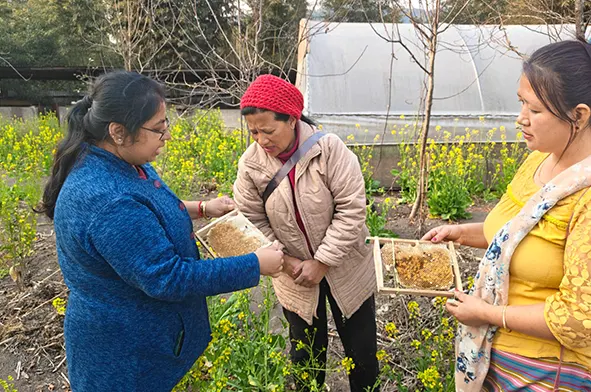
Fifteen local women and youths participated in the programme, which focused on equipping the participants with practical knowledge and hands-on skills in sustainable and climate-resilient beekeeping practices.
Field demonstrations were conducted to enhance technical understanding and promote scientific apiculture methods suited to the Himalayan ecosystem.
The event was coordinated by GBPNIHE-NERC Scientist-C Tridipa Biswas, who highlighted the critical role of beekeeping in strengthening climate-adaptive rural livelihoods. She emphasised that beekeeping is a low-investment, high-return livelihood option that supports biodiversity conservation and enhances agricultural productivity through pollination services.
She reiterated the institute’s commitment to empowering local communities through scientific capacity-building initiatives aligned with the Sustainable Development Goals (SDGs).
KVIC Junior Executive (Administration & HR) Sankalpa Bhattacharya provided 100 bee boxes with live colonies, along with essential beekeeping toolkits, to 10 selected beneficiaries. He underscored the transformative potential of beekeeping in rural economic development and assured of continued technical guidance and future training opportunities.
The programme received strong support from ZPM Rubu Tadii, who encouraged the beneficiaries to actively engage in the initiative and assured of assistance for future activities.
SHG Pakarchi chairperson Ngilyang Oka, along with the beneficiaries, expressed gratitude to the GBPNIHE-NERC and the KVIC for the support and requested continued training and capacity-building programmes to strengthen livelihood security in the region.