[ Prem Chetry ]
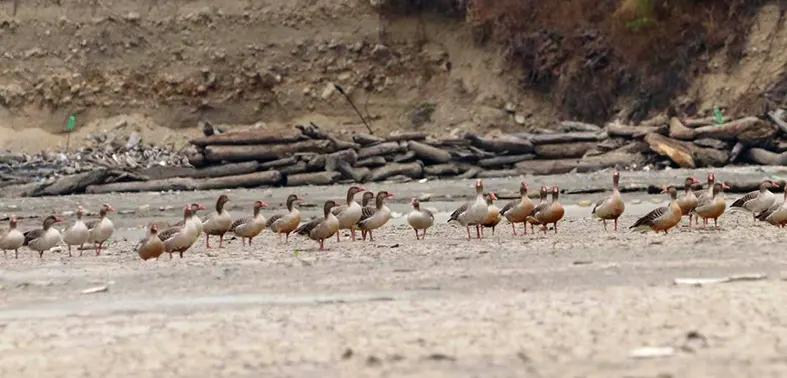
BICHOM, 28 Feb: The arrival of a large flock of greylag geese (Anser anser) in Bichom village in West Kameng district has led to the first-ever photographic documentation of the species in the district and the second in the state.
The presence of the bird in the village has further enriched its avian records. Although a sighting of this species was earlier claimed at Sela Pass, it lacked photographic evidence. However, the species was previously recorded in Ziro in Lower Subansiri district.
Harnam Hagam, a gram panchayat member from East Bichom and a conservationist and nature enthusiast, recorded the sighting of the geese.
“This species has been recorded here for the first time. I am sure such a new entry opens up possibilities of other rare migratory species visiting our region,” Hagam said.
Meanwhile, Dr Anurag Vishwakarma, senior project officer, WWF-India, central India landscape, confirmed the identification of the species.
“It is even more special because sightings of such a huge number of this species are quite rare,” he stated.
According to him, sightings of one or two pairs are common; however, observing such a large flock is rare and significant.
Hagam has previously documented species such as Pallas’s gull, ruddy shelduck, great cormorant, crested kingfisher, common merganser, brown-headed gull, great crested grebe, white-throated kingfisher, and bar-headed geese. The addition of the greylag geese this season has further enriched the village’s avian list.
The greylag goose is a large, sturdy wild goose easily recognised by its pale grey feathers, bright orange bill, and pink legs. It is significant as the original ancestor of most domestic geese seen today.
This species is widely distributed across Europe and Asia. Greylag geese are commonly found in wetlands, lakes, marshes, and open grasslands, where they graze on grasses and other vegetation. Birds that breed in colder northern regions migrate south during winter to escape harsh weather conditions.