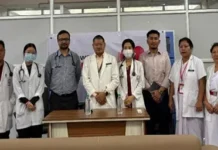
RONO HILLS, 14 Mar: A career counselling workshop was organised by the All Arunachal Pradesh Psychological Association (AAPPA), in collaboration with the ICMR-AITS project at Rajiv Gandhi University (RGU) here on Friday.
Around 30 participants, all postgraduate students and professionals in psychology, attended the programme.
The workshop aimed to strengthen the practical understanding of student counselling within the educational context of Arunachal Pradesh, where most schools and higher educational institutions still lack dedicated counselling services.
The organisers informed that “the design of the programme was developed as per the concerns related to students’ confusion regarding career pathways and academic pressures that had emerged within the ongoing ICMR-AITS project.”
A key objective of the initiative was to advocate the inclusion of trained student counsellors across schools and colleges in Arunachal, and to create linkage pathways between trained psychologists from within the state and educational institutions requiring counselling services.
The programme also served as an outreach and sustainability initiative under the ICMR-AITS project, aimed at strengthening mental health and career guidance support systems for students across the state.
Addressing the participants, AAPPA chairperson Dr Tadar Amar stressed on the importance of such workshops in bringing clarity to the students to make informed decisions about their careers.
The technical session was led by Jote-based National Institute of Technology student counsellor Rajiv Deka, who served as the resource person. Drawing from his professional experience, Deka shared insights into the responsibilities of a student counsellor, and deliberated on the processes pertaining to the areas of career counselling, academic stress management, and rapport building.
The workshop introduced key components of career counselling, including factors influencing career choices such as interests, aptitude, skills, and personality factors. The participants were also introduced to career action planning tools and activities that help students engage in self-exploration and make informed decisions.
The sessions further provided an overview of the Indian career landscape, including the framework of NEP 2020, different educational boards, and major selection examinations. Discussions also covered the use of psychological tests in career guidance and the need to develop a career counselling ecosystem within educational institutions. The programme incorporated audiovisual sessions, role plays, and group activities to facilitate experiential learning.
Following the technical sessions, Project Research Scientist-2 for the ICMR-AITS project Dr Leeyir Ete said that such initiatives contribute to greater awareness and institutional support for student counselling services, ensuring that students have access to timely psychological guidance and career support, while also empowering the mental health resource of the state.
During the discussions, the participants reflected on the growing psychological distress among students, particularly during examination periods, highlighting the urgent need for structured mental health support systems in educational institutions.
The programme concluded with the distribution of certificates.