DARKA, 7 Feb: Farmers, scientists, and local representatives participated in a three-day training programme on ‘Watershed management for sustainable livelihood for hill ecosystem’, held at Darka village in West Siang district from 5-7 February.
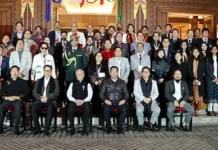
The programme was organised by the Indian Agricultural Research Institute (IARI), Gogamukh, Assam, in collaboration with the ICAR Research Complex for NEH Region, Arunachal Pradesh Centre, Basar, under the leadership of IARI Director Dr Ch Srinivasa Rao. A total of 100 farmers, including nearly 90 percent women participants, attended the training.
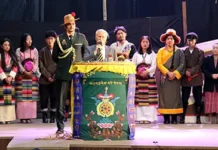
Addressing the participants on the inaugural day, IARI NRM Head Dr LK Baishya highlighted the importance of watershed management in sustaining hill agriculture, while IARI course director Dr PK Mishra presented a brief on the programme’s objectives.
Addresses were delivered by Dr Doni Jini, senior scientist (VEE) and West Siang KVK Head Dr Manoj Kumar, who emphasised on scientific farming, women’s empowerment, and sustainable livelihood opportunities.
Relevant technical publications were released during the inaugural programme.
The technical sessions commenced from the second half of 5 February and continued throughout 6 February, covering soil and water conservation, agronomy, fruit science, and integrated farming systems. Scientists, including Dr Binod Kr Dutta Borah, Dr Ampee Tasung, and Dr Thejangulie Angami, interacted with farmers and provided practical recommendations.
Agricultural inputs such as organic manure, vegetable seeds, agricultural tools, mineral mixture, and day-old poultry chicks were distributed to the farmers after the technical sessions.
A field day was organised on 7 February, where the participants were exposed to field-level demonstrations and best practices.
During the interaction and feedback session, the farmers expressed satisfaction with the training and requested that similar capacity-building programmes be conducted regularly in the future, particularly focusing on women farmers and hill ecosystem-based livelihoods.